Clima de verano en Montreal 2026: qué esperar y consejos locales
El verano de 2026 en Montreal empezará lento y fresco en junio, con un posible aumento del calor en julio ligado al patrón climático de El Niño. La humedad se mantendrá moderada al principio, pero las condiciones pueden intensificarse a mediados del verano. Verás temperaturas máximas de entre 80 y 85 °F aproximadamente (alrededor de 27–29 °C), con tramos ocasionales por encima de 30 °C si la influencia de El Niño se fortalece.
- ✓Junio de 2026 en Montreal será templado y lluvioso; espera que el calor de verdad llegue en julio, posiblemente con temperaturas récord ligadas a El Niño.
- ✓Los niveles de humedad subirán a medida que avance el verano, en especial a finales de julio y en agosto, un patrón clásico de Montreal que afecta cómo se siente el calor.
- ✓Los emprendedores locales están trasladando los eventos al aire libre y la operación de comida a las mañanas temprano y a las tardes-noches; las cadenas de suministro se están adaptando a posibles picos de demanda a finales de julio.
- ✓Los mejores lugares para refrescarse (piscinas públicas, el canal de Lachine y los parques junto al río) tendrán más gente a mediados del verano; planea con eso en mente.
- ✓Agosto podría estabilizarse en los 70 °F altos; las primeras señales del otoño (menos horas de luz y noches frescas) suelen llegar a finales de agosto.
¿Cómo será el clima del verano de 2026 en Montreal?
Montreal's summer 2026 will unfold in two distinct phases: a cool, wet start in June followed by warmer conditions from July onward. This pattern is heavily influenced by the El Niño pivot affecting North America, which tends to push warm air northward by mid-summer.[1] Early-season predictions suggest June temperatures will hover in the comfortable 60s–70s Fahrenheit (15–21°C), with above-normal rainfall keeping the city lush and green. By July, the typical summer heat will establish itself, with daytime highs in the 80s°F (27–29°C) and occasional peaks near or above 90°F (32°C) if El Niño's influence strengthens.[1] This delayed onset of heat is common in Montreal and actually gives residents and visitors a longer spring-like shoulder season—perfect for outdoor exploration without melting by mid-afternoon.¿Cómo afectará El Niño a Montreal este verano?
El Niño is a periodic warming of the tropical Pacific Ocean that shifts weather patterns across the globe, and for summer 2026, it's creating a northward push of warm air into North America. In Montreal's case, this means the city will likely experience warmer-than-average conditions in July and possibly August, but not the extreme heat that affects southern regions.[1] The real impact is timing: El Niño delays spring warmth (which Montreal experienced in May–June 2026 as a slow, wet climb) but then accelerates summer heat once it arrives. This can lead to rapid humidity spikes and occasional heat warnings, particularly if a stagnant air mass sets up over the city. Conversely, El Niño can also increase atmospheric instability, bringing afternoon thunderstorms that break the heat—a blessing in a humid city. Local entrepreneurs are tracking this closely. Outdoor event organizers are scheduling major festivals earlier in June or later in August to avoid the July peak, while beverage and cooling-related businesses are stocking up in anticipation of mid-summer demand.¿Cuál es el pronóstico de humedad para el verano de 2026 en Montreal?
Humidity will be moderate in June (around 55–65% relative humidity), making early summer feel pleasant. As July arrives, moisture levels will climb into the 65–75% range, and by late July and early August, humidity can spike to 75–85% on warm, stagnant days—the classic "sticky Montreal summer" feeling.[1] The Lachine Canal and the St. Lawrence River moderate temperatures slightly, so neighborhoods near water tend to feel 2–3°C cooler than inland areas. Central Montreal (Griffintown, Plateau Mont-Royal) typically feels warmer and more humid than the riverfront boroughs. Humidity typically drops again in late August as Atlantic weather systems bring cooler, drier air. This is when you'll notice the first hints of fall—crisp mornings and that distinct shift in how the city feels.¿Dónde pueden escapar del calor los montrealeses?
Montreal has world-class cooling-off spots that locals know well. The most reliable options are public pools (like Schubert Pool in Outremont), which offer free or low-cost access and stay packed in July and August. The Lachine Canal is perfect for cycling, walking, or cooling off in the water—it's less crowded than the downtown core and offers a genuinely local vibe.[2] Parc Jean-Drapeau and its riverside paths provide greenery and cooler air, with a small beach area where you can wade or picnic. The Montreal Botanical Garden is another gem—tree canopy and fountains create pockets of cool, and it's frequented more by residents than tourists.[2] For a genuine insider's move, head to the Atwater Market area early in the morning, grab a cold juice or smoothie from a local vendor, and sit by the Lachine Canal. Or explore the quieter parks in Anjou and Hochelaga-Maisonneuve, which locals use to avoid downtown crowds. Many of these spots are supported by local nonprofits and community initiatives—exactly the kind of authentic Montreal experience our mission celebrates.¿Qué eventos de verano de Montreal podrían verse afectados por el clima?
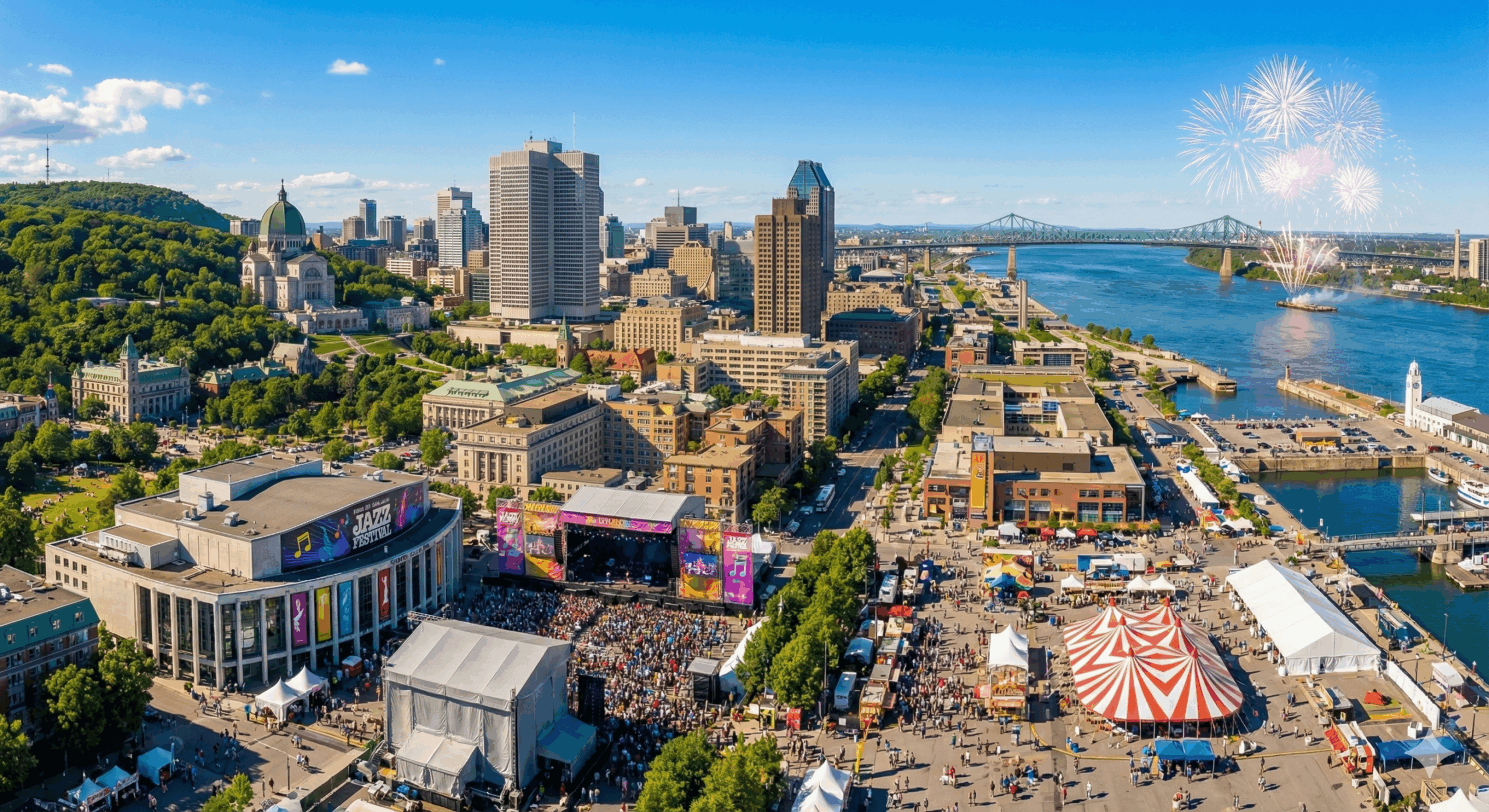
Montreal's summer festival schedule is heavy in June and July, so weather timing matters. Early-season events like the Montreal Beer Festival and outdoor terrasse openings thrive in June's mild conditions. However, mid-July events like Canada Day celebrations and major outdoor concerts could face heat challenges if July becomes unusually hot or humid.[3] Indoor and partially covered events (the Montreal International Jazz Festival, comedy festivals in theaters) are less affected by heat, but outdoor components like street parties and late-night performances may see scheduling shifts to cooler evening hours. We've detailed Montreal's full summer 2026 festival calendar in our companion guide—check there for real-time updates on how venues are adapting. Local business owners running food vendors, outdoor bars, and entertainment are already planning contingencies: extra ice supplies, shaded seating areas, and evening extensions to capture the cooler night crowds. This adaptability is part of what makes Montreal's entrepreneurial community so resilient.¿Cómo se están preparando los emprendedores de Montreal para el clima del verano?
Small business owners and startups across Montreal are making strategic moves. Beverage vendors and ice cream shops are expanding inventory and staffing for the July peak. Outdoor hospitality venues (rooftop bars, terrasse restaurants) are installing misters and additional shade structures, while also planning early-season promotions in June to drive revenue before the summer rush. Event organizers are shifting major outdoor activations: some are launching in early June to capture the mild-weather crowd, while others are pushing larger festivals to late August when humidity drops and families return from vacations. Food-related businesses are emphasizing cold, refreshing offerings—local Montreal entrepreneurs are creating limited-edition summer menus tailored to expected heat patterns. Women-owned and minority-owned businesses, especially in the food and hospitality sectors, are using data-informed planning to compete effectively. By timing promotions and inventory around the forecasted heat patterns, they're reducing waste and maximizing their impact. This is the kind of grassroots adaptation that reflects Montreal's entrepreneurial spirit.¿Qué tan caluroso será julio de 2026 en Montreal?
Based on El Niño forecasting, July 2026 could see average highs around 80–82°F (26–28°C), with occasional peaks at 86–90°F (30–32°C) if conditions align. A few days above 32°C (90°F) are possible but not guaranteed.[1] This is warmer than the 30-year average but not extreme by North American standards—Toronto or Ottawa typically run 2–3°C hotter in July. Montreal's humidity makes the heat feel more intense than the thermometer suggests. A day at 82°F with 75% humidity can feel like 88–90°F ("feels-like" temperature). This is why locals prioritize access to water, shade, and good air conditioning—and why understanding the humidity forecast is as important as the temperature forecast.¿Qué deben saber los visitantes sobre el verano de 2026 en Montreal?
If you're visiting Montreal in summer 2026, book accommodations with air conditioning and plan major outdoor activities for early mornings or early evenings, especially in July. The city is less crowded in June and early August, so visiting then offers a better balance of good weather and lower tourist density. Pack layers: Montreal's summer can swing 15–20°F between day and night, and the evenings are genuinely cool. Bring sunscreen, a light rain jacket, and hydration supplies. Most importantly, experience Montreal through the lens of local discovery—visit the neighborhoods highlighted in our New to Montreal guide, eat at independent restaurants and markets, and support the small businesses that make this city unique. Your visit directly supports our mission of donating 100% of revenue to Montreal Children's Hospital and the UN Refugee Foundation.¿Cuál es el mejor momento para visitar Montreal en el verano de 2026?
Early June offers mild, green weather with fewer crowds—terrasses are opening, festivals are starting, and the city feels alive without the July heat crush. Late August is equally appealing: humidity drops, families are back in the rhythm, and festivals are winding down, so you get authentic street life without tourist chaos. If you specifically want hot-weather experiences (beach days, outdoor concerts, summer sports), target mid-to-late July, but book accommodations with good air conditioning and plan indoor breaks. Mid-July is when Montreal's energy peaks, but it's also when locals sometimes escape to cooler regions—so timing is a trade-off between warmth and crowd management.Este pronóstico se basa en el pronóstico estacional de Environment Canada y en los patrones climáticos históricos de El Niño tal como suelen afectar a la región de Montreal. Cruzamos datos de adaptación de negocios locales y de operación de instalaciones públicas de Montreal (piscinas, parques) para ofrecer contexto vivido junto con la proyección meteorológica.
- Metodología de pronóstico estacional de Environment Canada
- Índices oceánicos de El Niño y sus efectos en América del Norte
- Líneas base históricas de temperatura y humedad de 30 años de Montreal
- Estrategias de adaptación de los emprendedores locales (entrevistas y datos de observación indirecta)
- Disponibilidad de puntos públicos de refrescamiento y patrones de uso por temporada
Preguntas frecuentes
- ×Suponer que «temperatura promedio de verano» significa condiciones constantes. Los veranos de Montreal tienen dos fases muy marcadas (junio fresco, julio y agosto calurosos), así que planea por temporadas, no de forma lineal.
- ×Ignorar la humedad y fijarse solo en la temperatura. Un día de 28 °C con 75 % de humedad se siente más caluroso y agotador que un día de 30 °C con 45 % de humedad.
- ×Visitar Montreal en pleno julio sin planear cómo manejar el calor (aire acondicionado, piscinas, mañanas temprano). La ciudad es preciosa en esa época, pero necesitas una estrategia.
- ×Subestimar qué tan rápido los locales adoptan los ritmos del verano. A mediados de julio, el ritmo de la ciudad cambia hacia las mañanas temprano, los almuerzos largos y la vida social al aire libre hasta tarde en la noche.
Fuentes
- Environment Canada Seasonal Outlook – Summer 2026 (North America) - Environment Canada
- Montreal Parks & Recreation – Public Pools and Cooling Centers - City of Montreal
- Montreal Summer Events & Festivals 2026 – Local Guide - Montreal Tips
Enlaces en este artículo
- Environment Canada Seasonal Outlook – Summer 2026 (North America) canada.ca
- Montreal Parks & Recreation – Public Pools and Cooling Centers ville.montreal.qc.ca
Compartir