

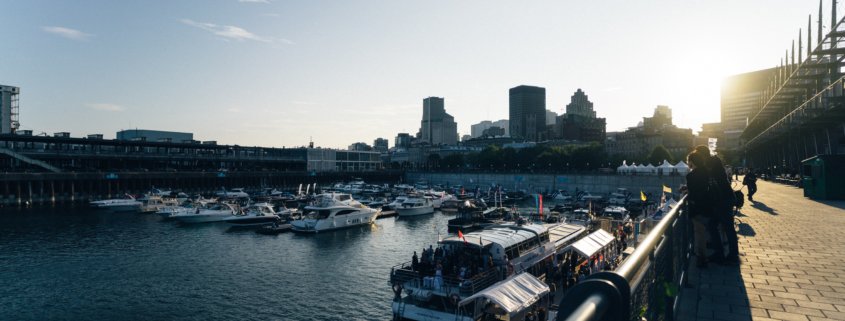
Yes — Montreal consistently ranks among North America’s most walkable cities, with a Walk Score above 65 island-wide and several neighbourhoods scoring 95+. The mix of dense residential streets, pedestrian-friendly mixed-use design, excellent public transit, and walkable winters (thanks to the Underground City) makes Montreal one of the easiest big cities on the continent to live without a car. Here’s what makes it so walkable, plus the 5 most pedestrian-friendly neighbourhoods.
Why Montreal Is So Walkable
- Dense neighbourhood design: Most central Montreal neighbourhoods were built before cars dominated — narrower streets, mixed shops and homes, walkable distances to everything.
- The Underground City (RÉSO): 33 km of climate-controlled tunnels connect metro stations, malls, hotels, and offices — making winter walking practical.
- Metro coverage: 4 lines cover most of the central city; bus network fills the gaps.
- BIXI bike share: 700+ stations across the island and South Shore.
- Compact downtown: Most central attractions are within a 30-minute walk of each other.
- Year-round sidewalks: Snow plowing on sidewalks is generally good in central neighbourhoods.
Montreal’s Walk Score vs. Other Cities
| City | Walk Score (city-wide) |
|---|---|
| New York | 89 |
| San Francisco | 89 |
| Boston | 83 |
| Montreal | 65 |
| Toronto | 61 |
| Vancouver | 59 |
| Chicago | 78 |
Within Canada, Montreal regularly tops walkability rankings or ties with Toronto. Central neighbourhoods score much higher than the island average.
5 Most Walkable Montreal Neighbourhoods
1. Plateau-Mont-Royal (Walk Score: 96)
Iconic spiral staircases, dense triplexes, walkable to everything: cafés, restaurants, Mount Royal Park, Saint-Louis Square. Often ranks as Montreal’s most walkable neighbourhood.
2. Mile End (Walk Score: 95)
Bagels, coffee, street art, indie shops all within minutes. Highly walkable street grid.
3. Downtown / Centre-Ville (Walk Score: 94)
Office towers, condos, malls, McGill — all walkable plus the Underground City for winter.
4. Old Montreal (Walk Score: 92)
Cobblestone, narrow streets, completely walkable. The most “European” feeling neighbourhood.
5. Le Sud-Ouest / Saint-Henri / Little Burgundy (Walk Score: 90)
Trendy and walkable with the Lachine Canal path, Atwater Market, Notre-Dame West shops.
What Makes Other Areas Less Walkable
- West Island: Suburban, low-density, more car-dependent
- Far East End: Less mixed-use, longer walks to amenities
- South Shore (Brossard, etc.): Built around malls and highways
Walking Montreal in Winter
Yes, you can walk in winter. Tips:
- Insulated boots with good grip are non-negotiable from December–March
- Use the Underground City for long downtown errands during cold snaps
- Layer with windproof outer shell — wind chill is the killer, not temperature
- Plan around plowing schedules — sidewalks are cleared within 24–48 hours of snowfall
Best Walking Routes for Visitors
- Old Montreal loop: Notre-Dame Basilica → Place Jacques-Cartier → Old Port → Bonsecours Market (2 hours)
- Plateau walking tour: Sherbrooke metro → Saint-Louis Square → Avenue Mont-Royal → Mile End → St-Viateur Bagels (3 hours)
- Lachine Canal walk: Atwater Market → Old Port via the canal path (1 hour)
- Mount Royal Park loop: Belvédère Kondiaronk → Beaver Lake → Cemetery (2–3 hours)